

A full dining room does not guarantee a profit. Rising ingredient prices, weekend wages and unreconciled takings quietly eat your margin. Owners who know how to calculate food cost percentage and understand restaurant payroll penalty rates take back control. This guide shows how bookkeeping for restaurants and cafes works, and which reports protect your margins each month.
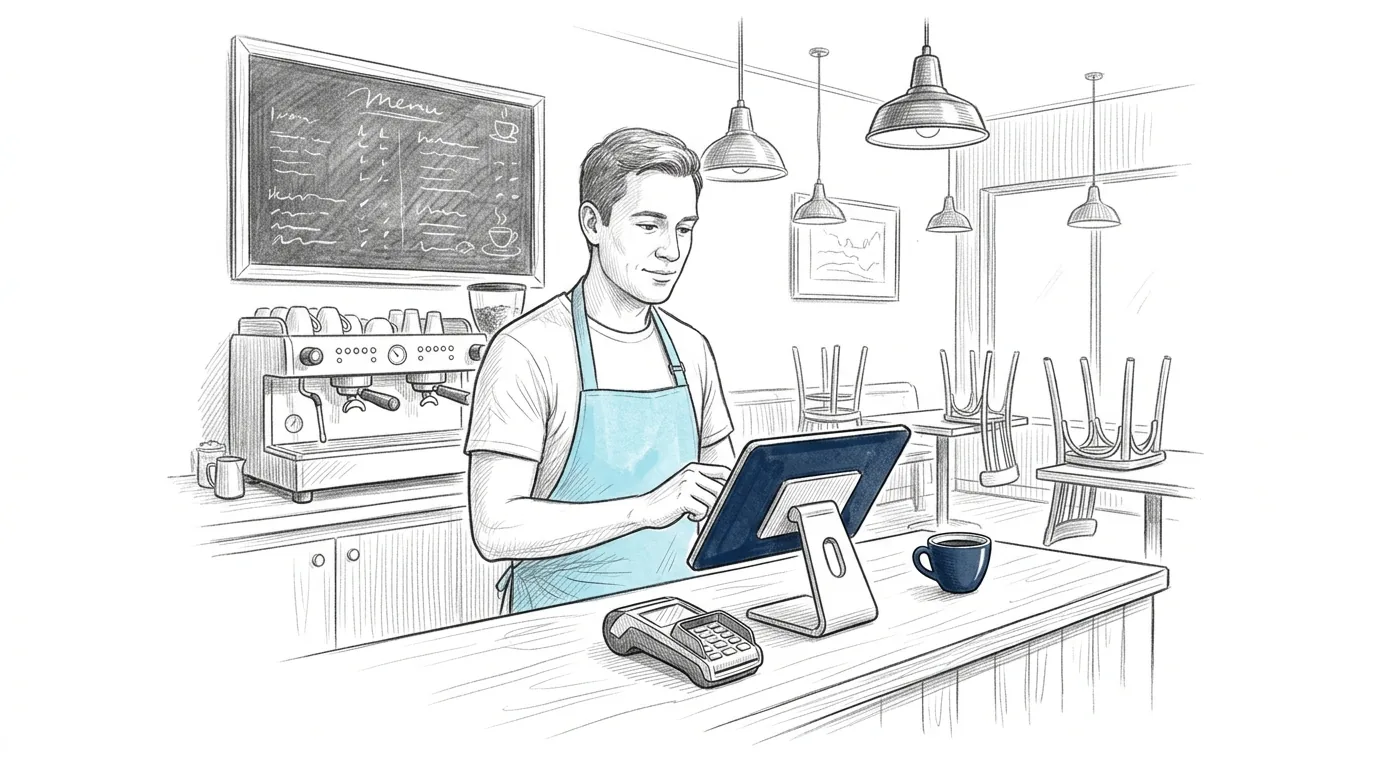
- Connect your POS to your accounting software and reconcile takings every day.
- Many restaurants aim for a food cost of roughly 28% to 35% of food sales.
- Most venues fall under the Hospitality Industry (General) Award, which sets penalty rates.
- Keep card tips separate from sales so your income and BAS stay accurate.
- Watch prime cost (food plus labour), which many venues keep near 60% of sales.
Start With POS Integration
Good bookkeeping for restaurants and cafes starts at the till. Your point of sale (POS) system records every sale, and your accounting software records your finances. When the two connect, daily takings flow into your books automatically.
Integration removes manual entry and cuts errors. It also splits sales into food, beverages and takeaway, so you see which categories earn the most. Reconcile your POS reports against your bank deposits each day. Cash, card and delivery app payments should all match your recorded sales.
Check delivery platform payouts closely. Commission fees and delayed settlements often create gaps. Record the gross sale and the fee separately, so your income stays accurate.
How to Calculate Food Cost Percentage
Food cost percentage shows how much of your food sales goes on ingredients. It is the single most useful number in a kitchen. Use this simple method:
- Add your opening stock to your purchases for the period.
- Subtract your closing stock. The result is your cost of goods sold.
- Divide it by your food sales, then multiply by 100.
Ingredient cost of $10,000 ÷ food sales of $33,000 × 100 = a food cost of about 30%.
Many restaurants aim for roughly 28% to 35%, though the right target depends on your menu and style.
Track beverages separately. Drinks usually carry a lower cost percentage than food. Mixing the two hides problems in either area. Run a stocktake at least monthly, since waste, over-portioning and theft all show up in this figure.
Restaurant Payroll Penalty Rates
Wages usually form the biggest cost after food. Hospitality staff often work nights, weekends and public holidays, so penalty rates apply. Most venues fall under the Hospitality Industry (General) Award, which sets minimum pay, penalty rates and a casual loading.
Casual employees receive a loading in place of paid leave. Weekend and public holiday shifts earn higher rates again. Junior rates and age-based pay may also apply. A wrong classification can lead to underpayment, and the Fair Work Ombudsman actively audits hospitality businesses.
Build your roster around your sales patterns. Compare wages to revenue each week. Many owners aim for a labour cost near 30% of sales, but you should set your own target. Reliable payroll services in Australia apply the correct award rates, report through Single Touch Payroll and pay super on time.
Tips, GST and Cash Handling
GST adds another layer. Most restaurant meals attract 10% GST, so you charge it on your sales and claim credits on eligible purchases. Some basic ingredients are GST-free, so code each supplier invoice carefully.
Tips need clear records too. Track card tips separately from your sales. Then pay them out to staff through your payroll process. Mixing tips with revenue inflates your income and your BAS figures.
Keep cash counts and float records every day. Small variances show you where errors or leakage occur. Your BAS then reflects true sales, not rough estimates.
Supplier Reconciliation
Restaurants buy from many suppliers, often weekly. Invoices arrive with price changes, credits and short deliveries. If you pay without checking, you lose money.
Match every delivery docket to its invoice. Then reconcile supplier statements each month. Query price rises early, since a small increase on a high-volume item adds up fast. Good restaurant bookkeeping catches duplicate invoices and missing credits before you pay them.
Key Monthly Reports for Restaurant Owners
Reports turn your records into decisions. Review these each month:
| Report | What It Shows | Why It Matters |
|---|---|---|
| Profit and loss | Income, costs and net profit | Overall margin health |
| Food cost percentage | Ingredient cost against food sales | Menu pricing and waste |
| Labour cost percentage | Wages against total sales | Roster efficiency |
| Prime cost | Food plus labour costs | Your biggest controllable costs |
| Cash flow summary | Money in and out | Supplier and wage readiness |
| GST and BAS summary | GST collected and paid | Lodgement accuracy |
Prime cost deserves special attention. It combines food and labour, and many venues aim to keep it near 60% of sales. When this figure climbs, act quickly on menu pricing, portion sizes or rosters.
Consistent bookkeeping Australia restaurant owners rely on makes these reports available within days of month end. You then spot problems while you can still fix them.
Protect Your Margins Every Month
We connect your POS to Xero, apply the right award rates to your rosters and deliver your monthly reports within days of month end. We provide bookkeeping for restaurants and cafes across Sydney from our North Strathfield and Liverpool offices.
Frequently Asked Questions
What is a good food cost percentage for a restaurant?
Most restaurants aim for about 28% to 35% of food sales. Your ideal figure depends on your menu, portion sizes and pricing.
Do restaurants have to pay penalty rates?
Yes, if the relevant award applies. Hospitality awards set higher pay for weekends, public holidays and late nights. Casual staff also receive a loading.
How often should I reconcile my POS takings?
Reconcile daily if you can, and at minimum weekly. Frequent checks catch cash variances and delivery app errors early.
What is prime cost in a restaurant?
Prime cost is your food cost plus your labour cost. It is the largest share of spending you can control, and many venues aim to keep it near 60% of sales.
Should delivery app sales be recorded gross or net?
Record the gross sale and the platform commission separately. That keeps your income accurate and lets you claim the fee as a business expense.