

Cash vs accrual accounting decides when your books count a sale or a bill, so one quarter can tell two very different stories. Cash accounting records income when money arrives and expenses when you pay them. Accrual accounting records both when the invoice exists. To show the gap, we ran one Sydney electrician’s quarter through each method, then mapped who can use which method and when a switch makes sense.
On this page
The Case Study Quarter at a Glance
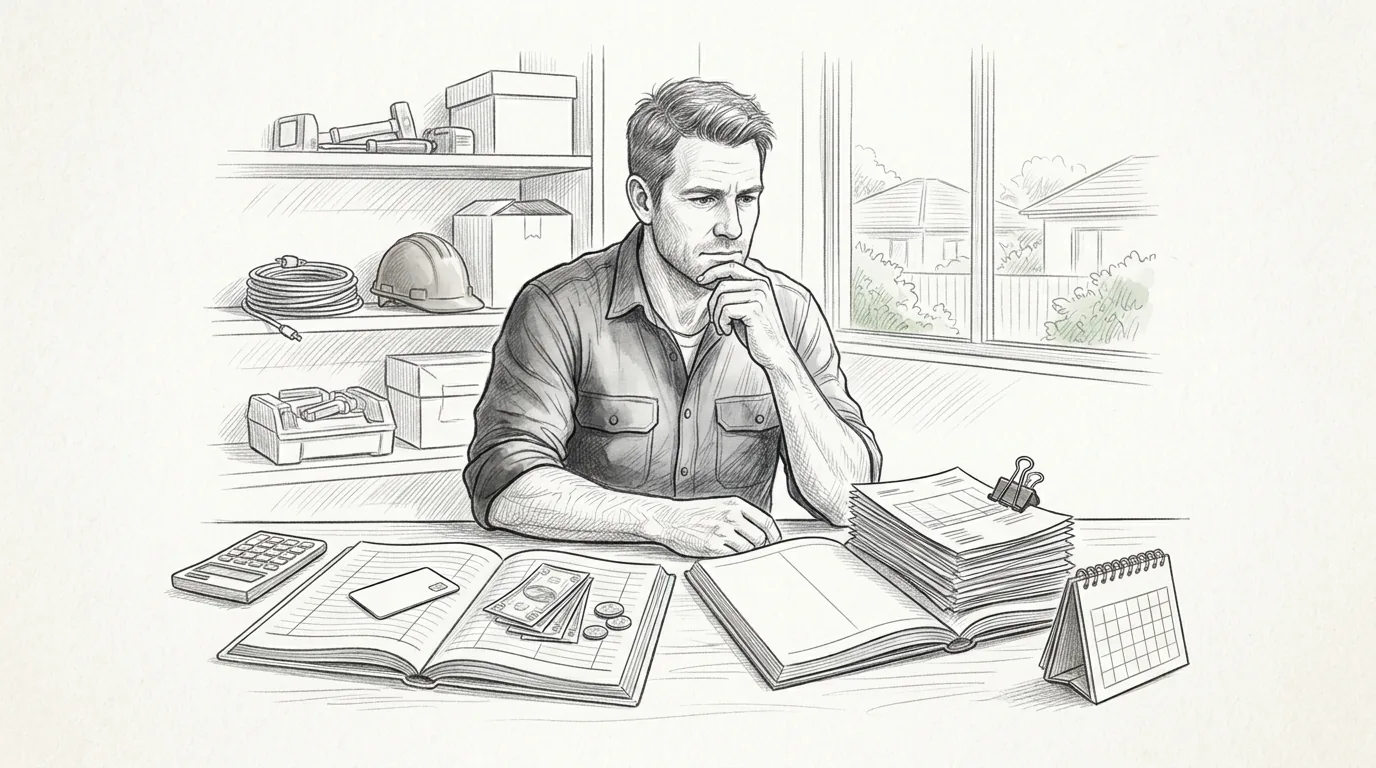
Meet a hypothetical Parramatta electrician. We invented the figures, which cover April to June 2026 and include GST at 10%. Every bill is a valid tax invoice.
| Transaction | Total incl. GST | Paid by 30 June |
|---|---|---|
| Job A: office fit-out (sale) | $22,000 | Paid in full |
| Job B: switchboard upgrade (sale) | $33,000 | Unpaid |
| Job C: apartment rewiring (sale) | $44,000 | Half paid ($22,000) |
| Cable and fittings (bill) | $11,000 | Paid in full |
| Subcontractor (bill) | $16,500 | Unpaid |
| Equipment hire (bill) | $5,500 | Half paid ($2,750) |
How Cash vs Accrual Accounting Records the Same Jobs
The work, the customers and the bank account stay the same. Only the timing rule changes:
- Cash method: income covers Job A and the paid half of Job C, a total of $40,000 excluding GST. Expenses reach $12,500.
- Accrual method: the books count all three jobs ($90,000) and all three bills ($30,000), whether or not any money moved.
- Part-paid work: cash splits Job C and the hire bill by what changed hands, while accrual takes the full invoice at once.
Profit, GST and Cash Under Cash vs Accrual Accounting
| Measure | Cash method | Accrual method |
|---|---|---|
| Income (excl. GST) | $40,000 | $90,000 |
| Expenses (excl. GST) | $12,500 | $30,000 |
| Profit for the quarter | $27,500 | $60,000 |
| GST on sales (1A) | $4,000 | $9,000 |
| GST credits (1B) | $1,250 | $3,000 |
| Net GST on the BAS | $2,750 | $6,000 |
| Net cash from these jobs | $30,250 | $30,250 |
| Cash left after paying the BAS | $27,500 | $24,250 |
| Customers still owe | Not shown | $55,000 |
| Suppliers still owed | Not shown | $19,250 |
Net cash: $44,000 received less $13,750 paid. Debtors and creditors include GST.
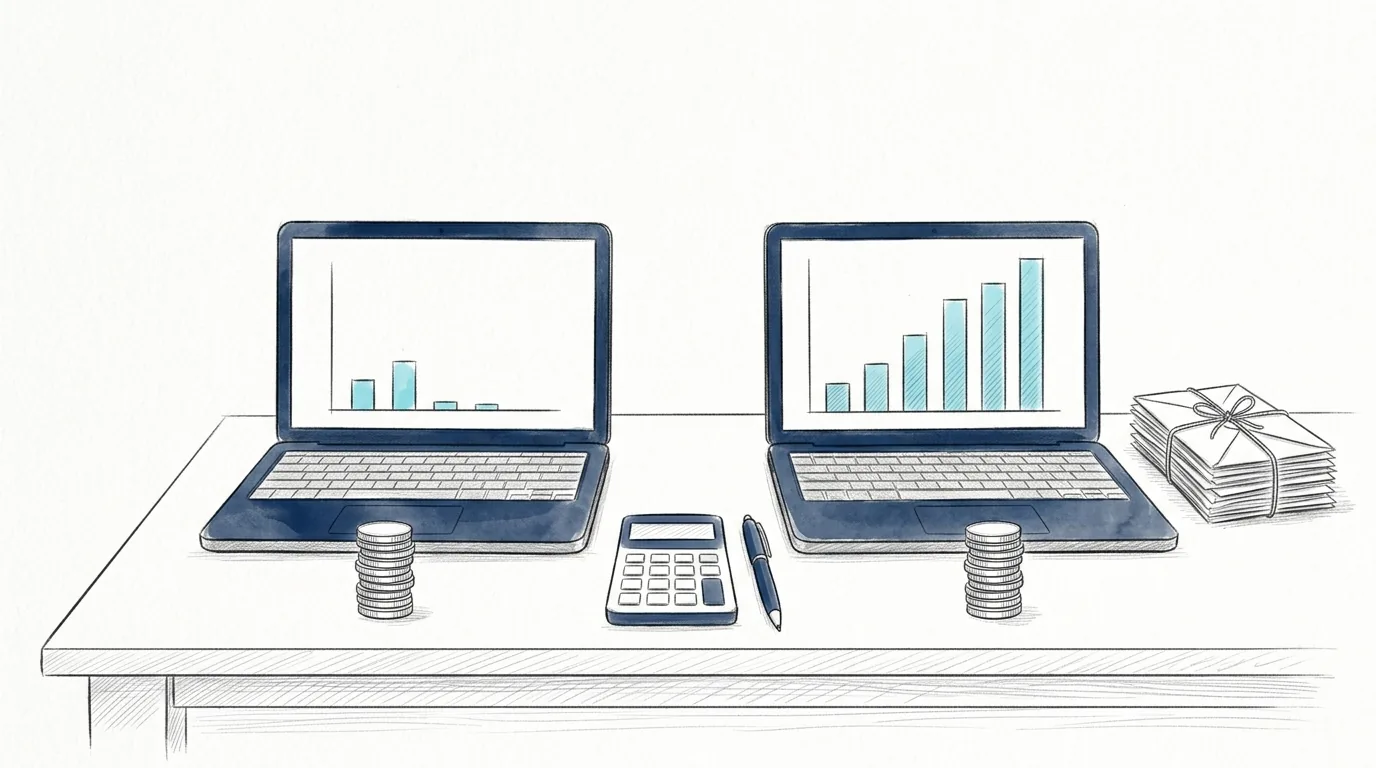
Accrual profit sits $32,500 higher. That gap equals the $50,000 still owed by customers less the $17,500 still owed to suppliers (both excluding GST). The accrual BAS also asks for $3,250 more GST, even though Job B has not paid a cent.
Both methods bank the same $30,250. Cash accounting delays GST on unpaid work, while accrual accounting reveals the $55,000 sitting in debtors.
Not sure which method your BAS uses?Send us your last quarter and we will compare both methods against your real invoices.
Which Story Should You Trust?
Each method answers a different question. Cash shows what you can spend this week. Accrual, by contrast, shows what the business actually earned, which matters when you price jobs, chase debtors or talk to a lender.
Many owners therefore lodge GST on a cash basis but review accrual reports monthly. That habit sits at the heart of good management accounting because it flags slow payers early.
Part-paid work widens the gap. Builders with progress claims and retentions often carry large debtors, so tidy ledgers matter in construction bookkeeping more than almost anywhere.
Who Can Use Cash vs Accrual Accounting in Australia
For GST, the ATO sets a clear line. Under its guidance on choosing an accounting method, a small business entity with aggregated turnover under $10 million may use either method. Most larger businesses must use the non-cash (accrual) method.
Income tax follows a different test. No turnover threshold applies. Instead, Taxation Ruling TR 98/1 looks for the method that best reflects your income. The earnings (accrual) method generally suits trading and manufacturing businesses. Meanwhile, the receipts (cash) method can suit a small professional practice where the owner personally earns the income.
Hospitality shows the point. A cafe with stock, staff and 30-day supplier terms needs accrual reports to see true food costs, so accrual-ready ledgers belong in any solid restaurant bookkeeping routine.
When Switching From Cash to Accrual Makes Sense
A move to accrual usually makes sense when one of these triggers appears:
- Aggregated turnover approaches $10 million, where the non-cash GST method applies.
- You invoice on 30 to 60-day terms and debtors keep growing.
- You carry stock, bill progress claims or rely on staff to earn income.
- A lender or buyer asks for accrual financial statements.
Timing matters too. The ATO only lets a change to non-cash GST start on the first day of a tax period. That first BAS picks up GST on unpaid and part-paid sales, plus credits you have not yet claimed. Our electrician would add $5,000 of GST and claim $1,750 of credits.
Smaller trade businesses often stay on cash because it matches the bank account. Good bookkeeping for tradies still keeps invoices and bills current in Xero, so both reports stay one click away.
Before you switch, check turnover, income tax position and debtors with a registered tax agent. Our accounting services can test both methods against your numbers before the next BAS.
Cash and Accrual Reporting by Industry
The right method depends on how your industry bills, gets paid and holds stock. Choose your sector to see how we set up reporting for it.
See Both Versions of Your Numbers Before You Choose
We set up Xero so you can read both reports, lodge your BAS on the right basis and plan tax without surprises. Businesses across Sydney work with us from our North Strathfield and Liverpool offices.
Frequently Asked Questions
Can I use cash for GST and accrual for income tax?
Yes, in many cases. A small business entity under $10 million aggregated turnover can use cash for GST while its income tax return uses the earnings method. Confirm the income tax method with your tax agent.
Does accrual accounting mean I pay GST before my customer pays me?
It can. The non-cash method reports GST when you issue the invoice or receive any payment, whichever comes first. In our case study, that added $3,250 of net GST.
How do I change my GST accounting method?
If you are eligible, contact the ATO or ask your tax agent to contact it for you. A move from cash to non-cash can only start on the first day of a tax period. Businesses with aggregated turnover of $10 million or more must ask the ATO for permission to use the cash basis.
Keep Reading
This guide contains general information only and does not take your personal circumstances into account. The case study uses hypothetical figures. Speak with a registered tax agent before acting on it.