

Profit vs cash flow is the gap that sinks businesses that look healthy on paper. Your profit and loss report can show a strong month while the bank account runs dry, because profit counts sales when you earn them and cash only counts money that has arrived. Three famous collapses show how wide that gap can grow. Each one also points to a simple monthly check any Sydney small business can run.
On this page

Profit vs Cash Flow: Three Collapses at a Glance
The details differ, but the pattern repeats. Reported profit looked fine, while the cash told another story.
| Company | What the reports showed | What the cash showed | Your check |
|---|---|---|---|
| Carillion (UK, 2018) | Reported profits and paid dividends | About £29 million in cash against liabilities of nearly £7 billion | Debtor ageing |
| Wirecard (Germany, 2020) | About €1.9 billion in trust accounts | The company admitted the balances probably did not exist | Bank reconciliation |
| Dick Smith (Australia, 2016) | Profit lifted by supplier rebates | Slow-moving stock and a $60 million inventory write-down | Monthly stock and margin review |
Carillion: Profit That Never Turned Into Cash
Carillion was a UK construction and services giant. It entered liquidation in January 2018 with liabilities of nearly £7 billion and just £29 million in cash, according to the UK parliamentary inquiry report.
A review commissioned by its own board found that the group had failed for years to convert reported profits into cash. Instead, it covered the gap with more debt and made suppliers wait up to 120 days for payment.
The lesson for a small business is simple. Profit on a job means little until the customer pays, so unpaid invoices are profit you cannot spend.
Wirecard: Cash That Was Never in the Bank
Wirecard, a German payments company, reported about €1.9 billion sitting in trust accounts. In June 2020, its auditor could not confirm the money. Days later, Wirecard said the funds most likely did not exist, and two Philippine banks called the supporting documents false.
Small businesses rarely face fraud on that scale. However, the same weakness appears in smaller ways: a balance in the accounting software that nobody has matched to the bank statement. Duplicate entries, missed fees and unrecorded refunds all hide in an unreconciled account.
Dick Smith: Profit Booked Before the Stock Sold
Electronics retailer Dick Smith collapsed in early 2016. Its administrators, McGrathNicol, reported that rebate-driven buying built up stock and pushed the product mix away from what customers wanted. The rebates lifted profit in the month of purchase rather than when the product sold.
In late 2015, the company wrote down its inventory by $60 million. The profit had arrived early, but the cash stayed locked in stock that would not sell.
Three Profit vs Cash Flow Checks for Your Business
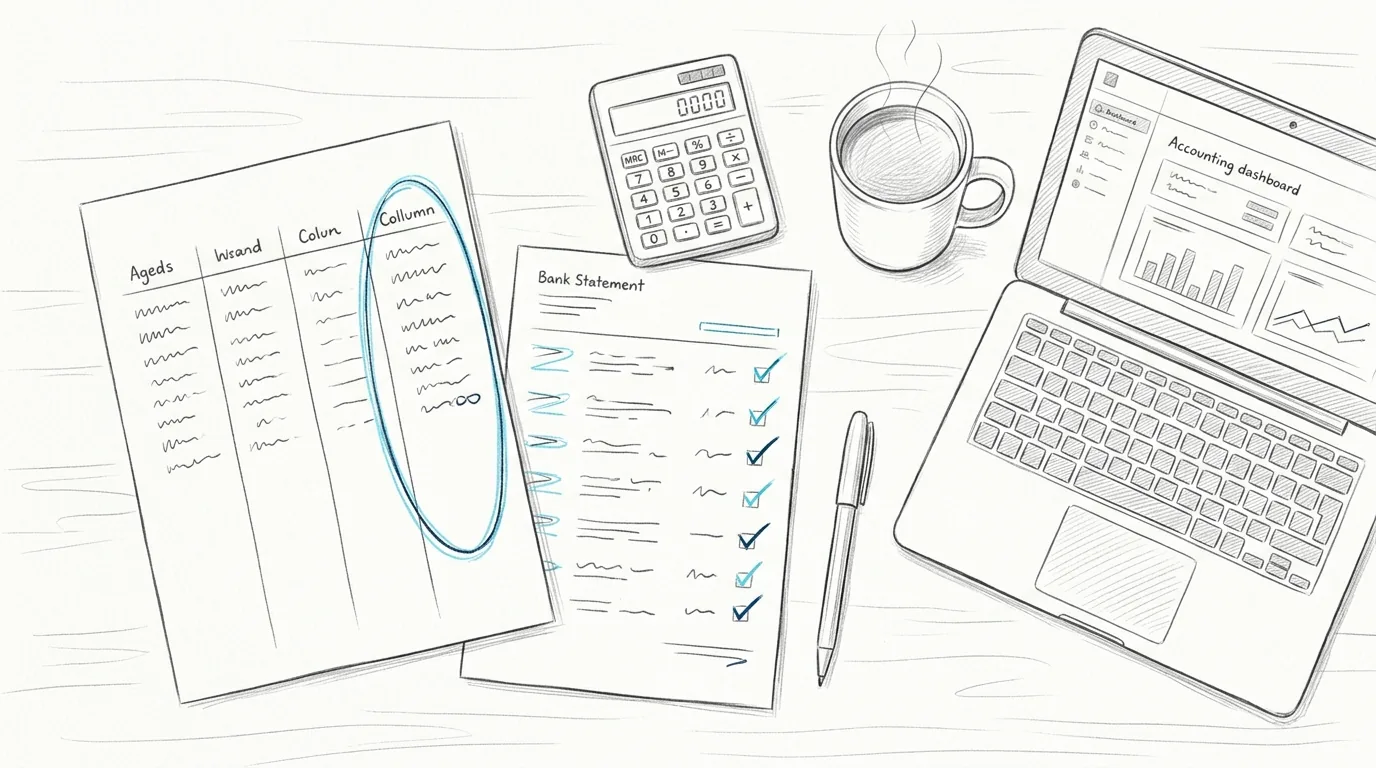
You do not need a forensic team to spot these warning signs. Three routine checks, run every month, catch most of them early:
| Check | What to review | Red flag |
|---|---|---|
| Debtor ageing | Unpaid invoices grouped by current, 30, 60 and 90+ days | Balances over 60 days growing month on month |
| Bank reconciliation | Every bank line matched to a transaction in Xero | Unreconciled items, or a book balance that differs from the bank |
| Stock and margin review | Stock on hand, gross margin and cash in the bank | Profit rising while stock or debtors rise faster |
Debtor ageing comes first because it shows how much profit still sits with customers. Builders feel this most, since progress claims and retentions stretch payment times, so weekly claim follow-up sits at the centre of construction bookkeeping.
Smaller trades businesses face the same risk on a smaller scale. One unpaid switchboard job can wipe out a month of margin, which is why good bookkeeping for tradies chases invoices the day they fall due.
Bank reconciliation is the Wirecard lesson. Match every transaction at least monthly so the balance in Xero equals the real bank balance. Cafes and restaurants need this more than most, because card settlements, delivery app payouts and cash takings land on different days. Frequent matching is standard practice in restaurant bookkeeping.
Profit up, bank balance down?Talk to us about getting your reconciliations and debtor reports back on schedule.
Read Your Own Numbers Every Month
The Dick Smith lesson is about attention. Set a fixed date each month to read three reports together: the profit and loss, the balance sheet and a cash summary. Profit alone tells only half the story.
Picture a hypothetical Parramatta cafe that reports $18,000 profit for March. On the same day, its bank balance drops, because $12,000 of new stock sits on the balance sheet and the quarterly BAS payment never touches profit.
Profit shows performance. Cash shows survival. Read both reports side by side every month, not just at tax time.
Wages deserve their own line in that review. Payroll is often the largest regular outflow, and super and PAYG withholding fall due whether customers pay on time or not. Clear reports from payroll for small businesses show those amounts well before they leave the account.
If month-end keeps slipping, hand the routine to someone who will run it on schedule. Our online bookkeeping services for small business can cover reconciliations, debtor reports and a monthly look at the numbers that matter.
Cash Flow Support by Industry
Every industry hides cash in a different place, from retentions to stock on the shelf. Choose your sector to see how we set up reporting for it.
Know Your Cash Before It Surprises You
We keep your Xero accounts reconciled and your reports current, so profit and cash tell the same story. Businesses across Sydney work with us from our North Strathfield and Liverpool offices.
Frequently Asked Questions
Can a profitable business run out of cash?
Yes. Profit counts income when you earn it, while cash only moves when customers pay. Slow debtors, stock purchases, loan repayments and tax payments can drain the bank even in a profitable month.
How often should a small business reconcile its bank accounts?
At least monthly, and always before you review reports or lodge a BAS. Businesses with many daily transactions, such as cafes, benefit from weekly or even daily reconciliation.
What is a debtor ageing report?
It lists unpaid customer invoices by how long they have been outstanding, usually current, 30, 60 and 90+ days. It shows which customers to chase first and how much profit has not yet turned into cash.
Keep Reading
This guide contains general information only and does not take your personal circumstances into account. Company examples come from public reports and news coverage. The Dick Smith claims rely on news coverage of the administrators’ report rather than the report itself. The cafe example uses hypothetical figures. Speak with a registered tax agent before acting on it.